Advancing Our Understanding of Depression: A Comprehensive Exploration
Mental health stands as a cornerstone of individual lives and the broader societal framework. Its impact reverberates across our well-being, work potential, and connections with family and community. The ubiquity of mental health conditions is striking. Annually, hundreds of millions grapple with them, while a larger multitude encounters them over lifetimes. Notably, 1 in 3 women and 1 in 5 men are poised to confront major depression, while conditions like schizophrenia and bipolar disorder, though less frequent, wield substantial influence.
Treatment potential for mental illnesses offers a beacon of hope, yet hurdles persist. Stigma often curbs disclosure to healthcare professionals and acquaintances, obfuscating true prevalence rates. Central to fostering support is the bedrock of reliable data. Insights into how, when, and why mental health issues emerge, their scale, and effective remedies are vital. This page unveils a tapestry of data on mental health prevalence, impact, and societal attitudes, steering us toward a more empathetic and informed future.
Understanding the prevalence of mental illnesses is a crucial step toward unraveling their impact on individuals and society at large. Through a lens that delves into the classifications outlined by the International Classification of Diseases (ICD) manual, a vivid picture emerges, revealing the varying degrees to which these conditions touch our lives.
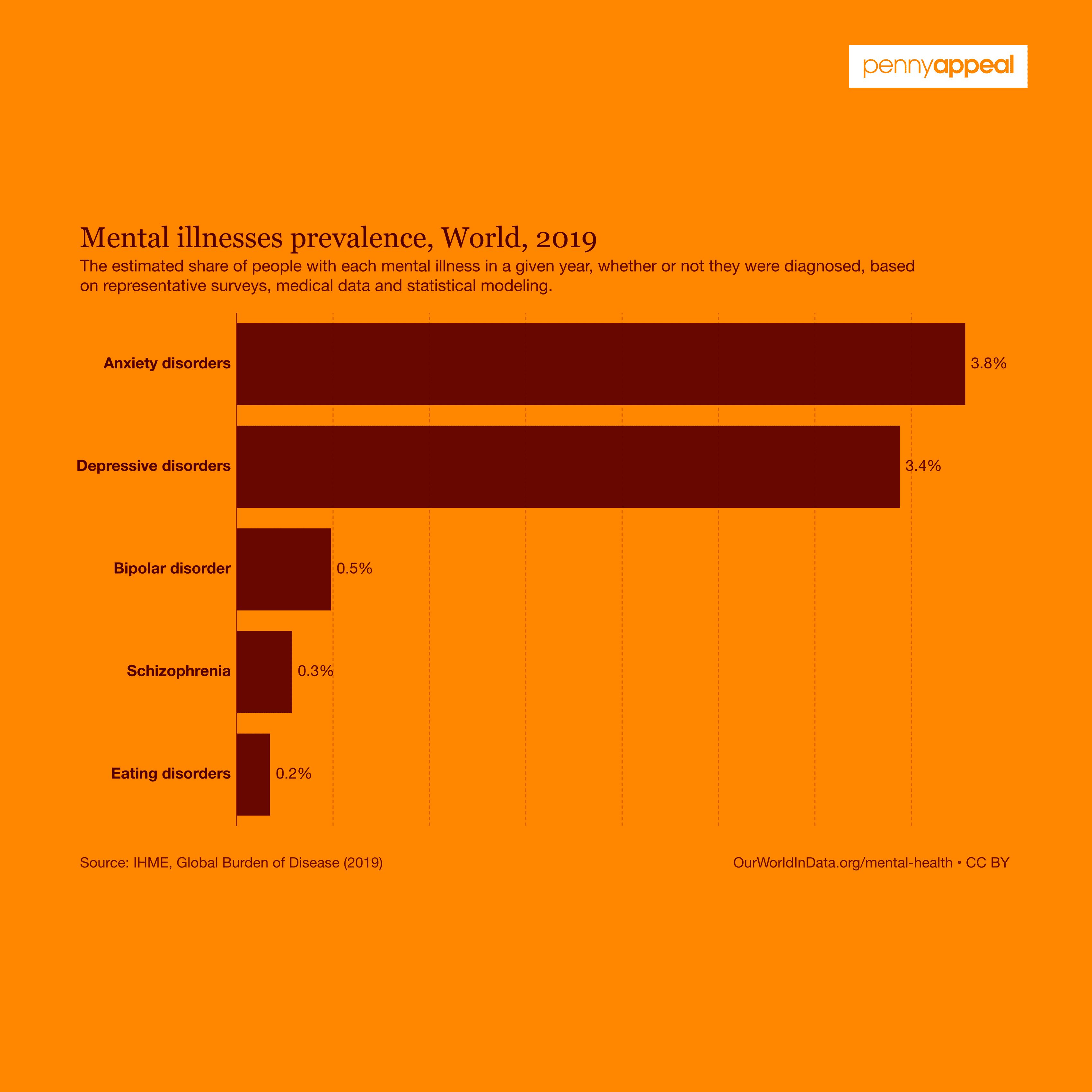
Intriguingly, a closer inspection reveals a contrasting landscape for disorders such as bipolar disorder, schizophrenia, and eating disorders. These conditions, while potent in their impact, are characterized by a lesser prevalence. To provide context, a mere 0.3% of individuals globally are estimated to be affected by schizophrenia. This statistic not only emphasizes the intricacies of mental health conditions but also underscores the imperative to dissect and comprehend their intricate nature.
Read more: https://pennyappeal.ca/blog/advancing-our-understanding-of-depression/
Comments
Post a Comment